What about a tornado?
I’m pretty high right now.
deleted by creator
Is it really a house if it doesn’t stop the wind or rain?
deleted by creator
So it’s more of a cubicle than a house then?
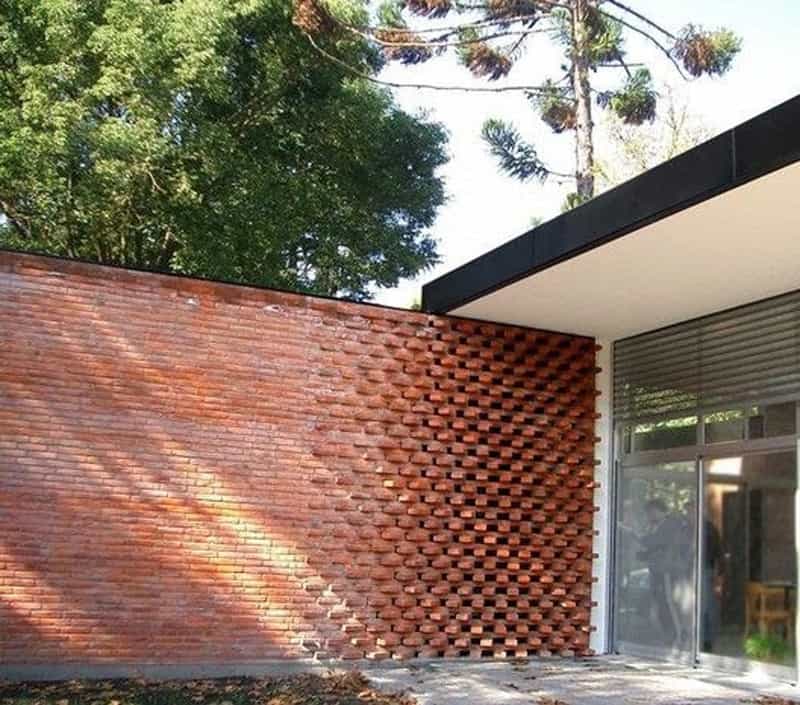
Similar to the portion of the wall here closest to the house? https://cdn.designrulz.com/wp-content/uploads/2017/09/outdoor-brick-wall-design.jpg
deleted by creator
Thank you for clarifying, because while I had a vague idea, I wasn’t sure.
So you live in a gazebo.
I think this would depend on the house being designed for this in the first place. A long time back I recall reading about how non-flow-through houses would endure high winds in a hurricane or tornado until one of the windows broke, at which point the hole in the house allowed the wind to ram air in (or suck air out depending on which way the hole was facing) and the whole house would disintegrate.
If my recollection is correct then there might be a slight benefit in the house-wrapping idea in that it might do a bit to prevent a hole like that from being taken advantage of. But only a slight benefit. Probably better to just do the traditional nailing of plywood over windows and such.
It would just be a waste of plastic.
This is like asking which color you should paint your house to prevent fire.
Gloss White, technically. It reflects more radiant heat from a bushfire. Not a game changer but could give a very mild advantage.
How about metallic paints? Want to test my chrome house against your white house.
Any color you want, just make sure it’s 80% asbestos and you’re set.
In both cases, borrowing the words of stand-up drunkard Ron White, “It’s not that the wind is blowing; it’s what the wind is blowing.”
The house itself should be well waterproofed, the problems come from broken windows, punctured roof due to falling trees, or in a tornado, just being pushed over.
So you’re saying we should use Bubble wrap instead. Got it!
oh shit…
brick house, concrete, or wood house?
*brick house, wood house or straw house
Not by the hair of my chinny chin chin!
I swear I knew what it was going to be before I clicked on it
OR I’LL BLOW YOUR HOUSE IN!!
modern houses are already wrapped in tyvek which is super strong but it is inside the exterior shell.
It is terrible.
It would create more of a barrier for wind and water to get caught in which could result in much more structural damage. My understanding is you WANT the air to flow through a house unabated in both situations as it would remove the instances of areas of very different air pressure which would result in essentially an air explosion.
This is the correct answer.
Kind of - you’ll also get wind uplift if you have openings in those situations.
Yeah, there’s no 100% to saving your house. It’s more important to have somewhere safe to stay during the highest winds and pressures.
So if there is a tornado coming, should I run around opening windows?
Realistically if a tornado is bearing down on your home, get to safety. Just don’t be surprised if the house starts to “breathe” around you as it gets closer.
Also history has shown that if you can do that before a tornado it helps. Mainly that people have literally been sucked out of windows or doors that burst open from the pressure differentials. Is it 100%? No, but from my reading, education, and direction from more experienced people if you live in a house do it before the tornado comes if you’re concerned. Just that there’s pros and cons for either situation.
I’ve through three major hurricanes: Irma, Ian, and Milton. Irma was okay, Milton was bad, Ian was baaad.
Short answer: nope.
-
It would not hold up.
-
New houses are built to crazy code anyway.
-
The big risk is flooding, and a tarp won’t do anything about it.
-
if you want mold in your house, yes. better to reinforce the house, or build it out bricks/concrete. plus, plastics smells when it heats up overtime and degrades releasing chemicals.
It couldnt hurt provided you remove it immediately after the storm is over and you would need to use something substantially stronger than kitchen grade wrap. Think industrial pallet wrap and a LOT of it definitely a large expense and a mountain of work for a questionable level of protection.
Practically speaking though it could prevent a lot of minor storm damage and prevent it from becoming large damage, would definitely protect the windows to some degree and secure items so they dont get ripped off the house.
I think that in order to explain my thoughts on this I want to explain how warehouses transport pallets of stuff with plastic wrap. Using plastic wrap for transporting/moving stuff is incredibly useful, but not how you might think. It’s not that the stuff inside is any safer than if you didn’t use it. It’s more that the stuff inside is incredibly contained and likely to hold it’s shape even if things start to break. Which means you won’t have a giant mess to clean up, and you can reasonably rely on it to support any other things stacked on top of your pallet.
This wouldn’t work for safeguarding your house, because if you’ve ever dunked something wrapped in Saran wrap you’ll notice that it’s not always water tight. Add extreme winds and the wrap will likely peel off and make things worse. I think you’d probably have a giant mess, and be no more protected than if you didn’t use any Saran wrap at all
Yes absolutely
Having a proper, stable house would be a better option. Those American stick and cardboard houses are not made to last.
Materials like stone in some of the US (I’m specifically thinking places with very little airflow like in parts of the deep swampy south) would be deadly without constant, properly-running mechanical ventilation, for one. In a power outage in the south, people would die without it as stone buildings spend all day getting heat and radiating it back out. That type of house suits some cold climates fine, but is very bad in 35 degrees with 80% humidity. Likewise, in high-humidity environments, mold becomes a real issue without that mechanical ventilation (opening windows does nothing when outside is that humid and particularly when there is no wind).
In earthquake zones, you WANT flexibility; stone and brick are deadly as mortar joints fail and the structure collapses.
I think you underestimate how strong properly-built wooden-construction homes can be. There are also materials and cost issues to building with other things. Finally, as I started with, home construction should be appropriate to the climate in which the house is built with consideration for the local materials and safety.
Here in Japan, we have wood and steel-reinforced concrete. Rarely, you’ll find reinforced block, but I think that was a fad that passed. Anything brick-and-motor now has all kinds of steel bracing added for earthquake protection. The house I’m in is not far from Fukushima and survived the 2011-03-11 earthquake and tsunami with only a minor thing to be fixed (and some cosmetic damage to wallpaper). It’s made of wood.
Edit: fixed an “a lot of the US” that was left from a previous wording and further clarified what I had in mind. A lot of the US was indeed wrong and not what I meant to post.
That’s BS. In the Mediterranean we are used to be at nearly 40°C and 90% and houses are made of bricks and concrete. Even the cheaper ones. And no need for mechanical ventilation if the house is built the right way.
“the right way” is like “a basement”, right? Because that seems to be something too many American houses lack.
Depends on the area of the US. In the south, the water table is high enough that it’s usually not worth all the trouble trying to keep it dry. Same for most of Japan here.
Yep, whether or not houses typically have basements is very region-specific. Could be due to the water table, could also be due to how deep (or not) the bedrock is. Most houses in the Northeast US do have basements.
Double wall with insulation in the middle.
Bricks breathe. Not sure about concrete.
Materials like stone in a lot of the US would be deadly without constant, properly-running mechanical ventilation, for one. In a power outage in the south, people would die without it as stone buildings spend all day getting heat and radiating it back out. That type of house suits some cold climates fine, but is very bad in 35 degrees with 80% humidity.
What nonsense is this? I grew up in concrete houses on the equator.
I re-arranged some of my post and did not proofread properly. I was specifically thinking about some areas that are stagnant around bayous and swamps in parts of the US south. I definitely didn’t mean to say ‘most of the US’. If a place gets enough wind and airflow naturally, it’s fine.
Does wood still catch fire? I’m fine if I never have another house fire.
Thus, concrete and steel for me.