France has stronger worker protections, shorter work hours and far lower persistent unemployment than Spain, saying that they do worse than Spanish is, at the very least, highly debatable.
True that Spain also has a very active protest culture, more centered in collective bargaining and less propensity to catch things on fire. That doesn’t make either more effective on its own, they do what works for them.
I didn’t say France does worse than Spain in terms of worker right. It’s absolutely possible that over the previous decades their protests were effective and granted them many rights. What I’m saying is that in recent years effectiveness of those protests was largely diminished. That’s why I said I don’t remember last successful protest, not that there never was one. People confuse the scale or protests with their effectiveness. Another example:
“”“On 4 July, the president of an employers’ organization, MEDEF, estimated that the riots cost businesses around €1 billion. This estimate was based on “200 business which were thoroughly looted, 300 bank branches destroyed, 220 supermarkets that were damaged—of which 25 were burned to the ground—and nearly 1200 independent businesses that were affected”. “””
What was achieved? Nothing. This is the pattern I see in France. Really impressive scale or protests but no results. At the same time I’ve seen many successful strikes in Spain but since those are usually resolved by sitting at a table and negotiating they don’t look as nice on the TV and people are not impressed by them.
I genuinely don’t know what point you’re trying to make.
You agree that french workers have strong protections, and that these were achieved by their aggressive protests, so that’s not it…
Is it only about the effectiveness of recent protests?
Because the explanation for that seems fairly simple: €1 billion of business costs are very easily absorbed by today’s multinational corporations, but not so for a small local company, so the mega wealthy come out even stronger.
Huge multinationals need to be cut up by governments, like the robber barons they are, except that we’re in such a globalised economy that no country wants to shoot itself in the foot that hard, hence the current downfall.
My hope for Europe is that trump eventually pushes so hard that we outright restrict market access to the likes of Amazon, Microsoft etc, and put in place a system that prevents any one company from obtaining such huge shares.
Is it only about the effectiveness of recent protests?
Yes, the last decade or two.
€1 billion of business costs are very easily absorbed by today’s multinational corporations
Whey you burn schools, cars and small businesses you’re not hurting multinational corporations in any way.
What I’m saying French protests are mostly performative. Government knows that violent protests like that will eventually fizzle out and they just have to wait them out.
What does work are long term disruptions. For example railway workers announcing they will only provide minimal services during some time. This affect not just profits but other parts of economy. If they are loosing €1B every month and you can sustain the strikes during a year… making a deal with workers quickly starts making economical sense. Showing your discontent on the streets (in a peaceful) also makes sense as it gives visibility to the cause and helps to get more people involved. Rioting achieves very little.


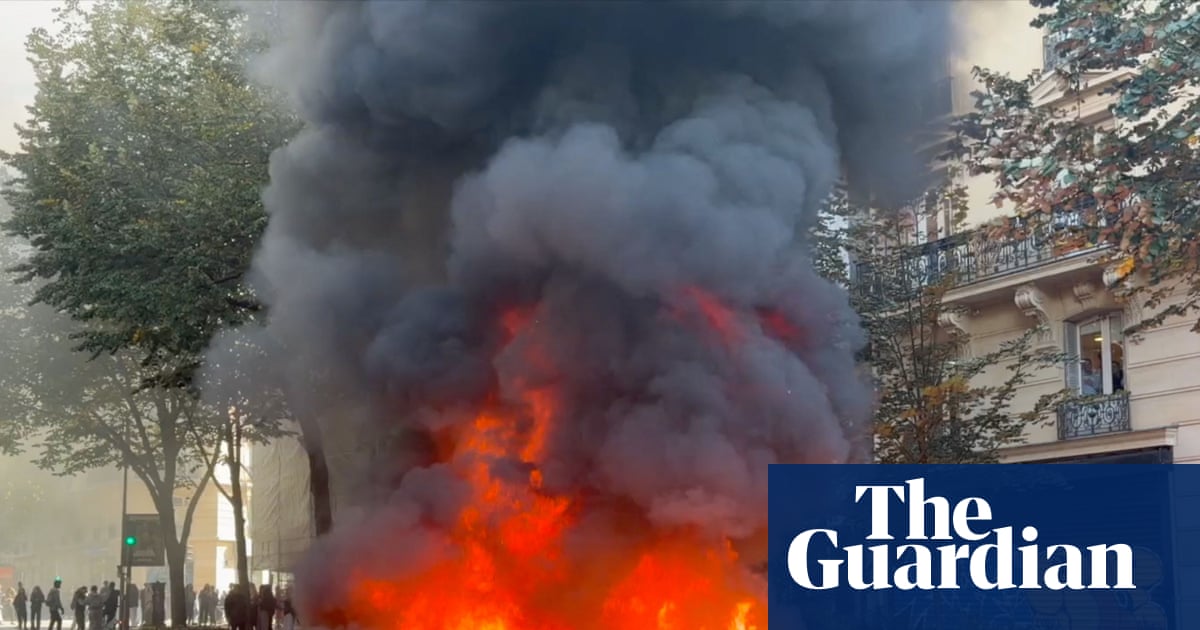
Nah, bullshit.
France has stronger worker protections, shorter work hours and far lower persistent unemployment than Spain, saying that they do worse than Spanish is, at the very least, highly debatable.
True that Spain also has a very active protest culture, more centered in collective bargaining and less propensity to catch things on fire. That doesn’t make either more effective on its own, they do what works for them.
I didn’t say France does worse than Spain in terms of worker right. It’s absolutely possible that over the previous decades their protests were effective and granted them many rights. What I’m saying is that in recent years effectiveness of those protests was largely diminished. That’s why I said I don’t remember last successful protest, not that there never was one. People confuse the scale or protests with their effectiveness. Another example:
“”“On 4 July, the president of an employers’ organization, MEDEF, estimated that the riots cost businesses around €1 billion. This estimate was based on “200 business which were thoroughly looted, 300 bank branches destroyed, 220 supermarkets that were damaged—of which 25 were burned to the ground—and nearly 1200 independent businesses that were affected”. “””
What was achieved? Nothing. This is the pattern I see in France. Really impressive scale or protests but no results. At the same time I’ve seen many successful strikes in Spain but since those are usually resolved by sitting at a table and negotiating they don’t look as nice on the TV and people are not impressed by them.
I genuinely don’t know what point you’re trying to make.
You agree that french workers have strong protections, and that these were achieved by their aggressive protests, so that’s not it…
Is it only about the effectiveness of recent protests?
Because the explanation for that seems fairly simple: €1 billion of business costs are very easily absorbed by today’s multinational corporations, but not so for a small local company, so the mega wealthy come out even stronger.
Huge multinationals need to be cut up by governments, like the robber barons they are, except that we’re in such a globalised economy that no country wants to shoot itself in the foot that hard, hence the current downfall.
My hope for Europe is that trump eventually pushes so hard that we outright restrict market access to the likes of Amazon, Microsoft etc, and put in place a system that prevents any one company from obtaining such huge shares.
In the meantime, I’ll protest.
Yes, the last decade or two.
Whey you burn schools, cars and small businesses you’re not hurting multinational corporations in any way.
What I’m saying French protests are mostly performative. Government knows that violent protests like that will eventually fizzle out and they just have to wait them out.
What does work are long term disruptions. For example railway workers announcing they will only provide minimal services during some time. This affect not just profits but other parts of economy. If they are loosing €1B every month and you can sustain the strikes during a year… making a deal with workers quickly starts making economical sense. Showing your discontent on the streets (in a peaceful) also makes sense as it gives visibility to the cause and helps to get more people involved. Rioting achieves very little.