
Volvo have launched one that reaches 700 km https://www.volvotrucks.com/en-en/trucks/electric/volvo-fh-aero-electric.html
And Mercedes have one that reaches 500km https://www.mercedes-benz-trucks.com/gb/en/trucks/eactros.html#carousel-097709c497-item-6becb3f47d-tabpanel I think the Mercedes was launched earlier so they might upgrade that soon.
I’ve worked with very few truck in my life. And those were in our conscript military.
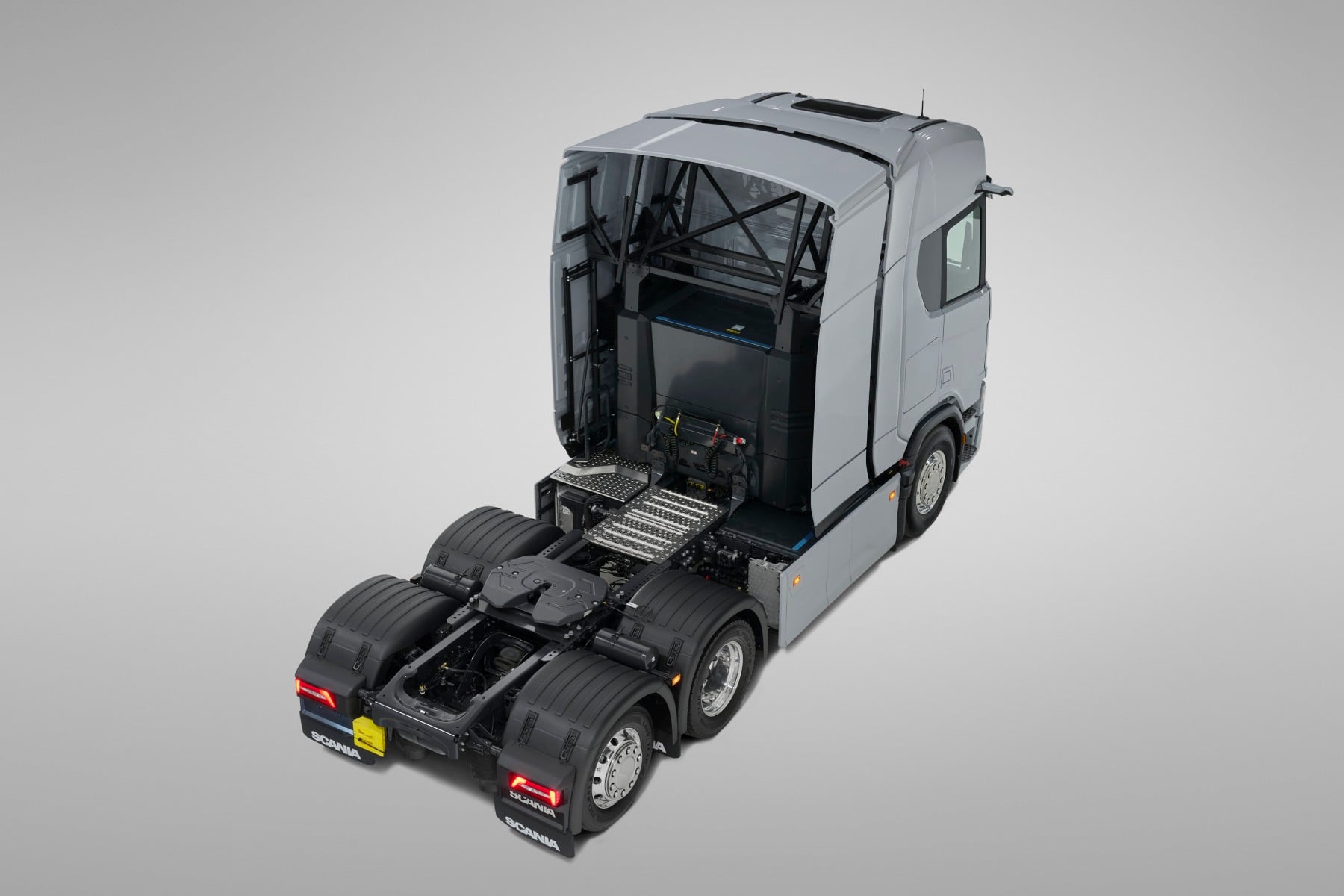
So I’m just trying to confirm, do commercial trucks have spare wheels? If yes are they usually behind the cab or somewhere else?
In Europe I don’t think so. Sometimes the trailers have spare tires on them.
Coaches do have spare tires (usually in the front, behind the license plate basically)
Great for urban areas with emission zones. And they’ll undoubtedly go further as the high capacity charging network expands. 720 km is pretty good already. Could be interesting for companies running regular, predictable routes. E.g. daily resupply of cooled goods, supermarket suppliers. This won’t replace whole fleets, but it will be interesting for parts of fleets and create the demand to build out the necessary infrastructure.
e-trucking is already way beyond that. As mentioned before, a German youtuber “Elektrotrucker” is showing his daily work as long distance e-trucker, driving all across Europe, on non predictable routes, commercially and competitively, not just for fun.
Contrary to popular belief, the infrastructure in Europe is already good enough for that.
That’s awesome!
I wonder what the future will look like for long-distance haulage. These solutions should be fine for trucks that always return to their depots within 24 hours, but what about those that are away all week? Haulage companies will want confidence that they can have their trucks charged anytime, anywhere.
Maybe we need to make freight trains a thing again. Less stress on the roads, less infrastructure changes.
in Europe there are fast charging hubs in all main highways. Maybe not every service station, but every other yes. I drove with my EV from north to south Europe 3 times and had zero problems. And about charging times: a toilet break and a coffee.
Also truck drivers have to take periodic rests anyway.
I guess this is mainly a problem for the US or say Australia. I can’t really imagine anywhere in Europe where you could/would drive a truck of that size that isn’t also within the range of this truck’s battery pack away from a charging station.
Scotland, mid-wales, lot of places in rural England? There’s strict laws around how long drivers are allowed to drive for, so driving a couple of hours out of the way might not be an option.
Well… they did say Europe…
/s
They seem to have a capacity per pack of 80 kwh, for a total of 560kwh. Ultrafast chargers could take that from 0 to 100 in less than 30 minutes, theoretically. (1.5 MW flash charger). Or just have them charge overnight slowly when the driver is asleep. A single basic 100 KW DC charger would suffice to do it in 6 hours.
Or just have them charge overnight slowly when the driver is asleep. A single basic 100 KW DC charger would suffice to do it in 6 hours.
Assuming they can get to a charger. Lots of trucks pull up in laybys, instrustial estates and other random locations so the driver can sleep, and there’s strict laws around how long a driver can drive for.
Maybe existing petrol stations would pivot to being more like truck stops, where trucks can stop overnight and charge.
Yeah, at least in my country, truck rest stops are extremely common on the highway. Would not be difficult to add chargers to them if there was a need.
Yeah, but I’m thinking about areas not near motorways.
So we just need someone to install EV chargers at rural ‘dogging’ hotspots?
It sounds like it. I’m sure you’re able to provide a comprehensive list for such locations?
Only for a select few locations in the region. If I’m travelling further afield, I normally have to text your mum to ask for directions :)
Truck stops with multiple 1MW chargers are pretty rare, but the infrastructure can be built in time. 100kW is a challenge in the numbers that would be used for overnight charging; again, it’s just time and investment.
These are European long haul vehicles which are different than for example Australian or North American long haul - the trips are much shorter. Expectations would have to change, though that’s probably a good thing for safety.
Depending on where you are you you don’t even need trucks with this much range, because the time that drivers are allowed to drive by law is already the limiting factor. Elektrotrucker is a german guy who has been driving long haul with electric trucks for some time now and with a bit of planning and an app that he helped develop he could drive through all of Europe. He’s actually starting a round the world journey with an electric truck right now.
Hm, no specs besides batteries?
I’m assuming “up to 720km” is with an empty trailer or even without one in perfect weather
The e Actros 600 with a slightly smaller battery manages 500 km at full load (well 40t out of a max allowed 44t total weight). This is probably with good weather. That Scania should get further. So it makes no sense to assume that this Scania wouldn’t have a longer range.
Yeah, but how much ascent was there? Or are these tests on flat roads? Actually are these range estimation tests standardized? I assume not. I’d imagine something like benchmarks for computers - flat road, hilly road, mountain road, mixed road and few other combos all with defined characteristics.
If you want to see range in daily use under real conditions, have a look at the Elektrotrucker videos. 600 kWh trucks usually have enough range to be practicable in daily long range hauling in Europe. If that above battery solution can boost the total capacity to around 900 kWh, 700 km range, with 42 tons total weight, ie a quite typical load is realistic under at least mild conditions (18°C) in certainly relevant configurations. Sure, wind, weather, geography and other factors can play a role. But there are countless scenarios and the technology is very new. Which is why if you are interested in real scenarios, not just optimal or nice weather ones, have a look at those e-truckers that are long holing already today and their experiences.