…
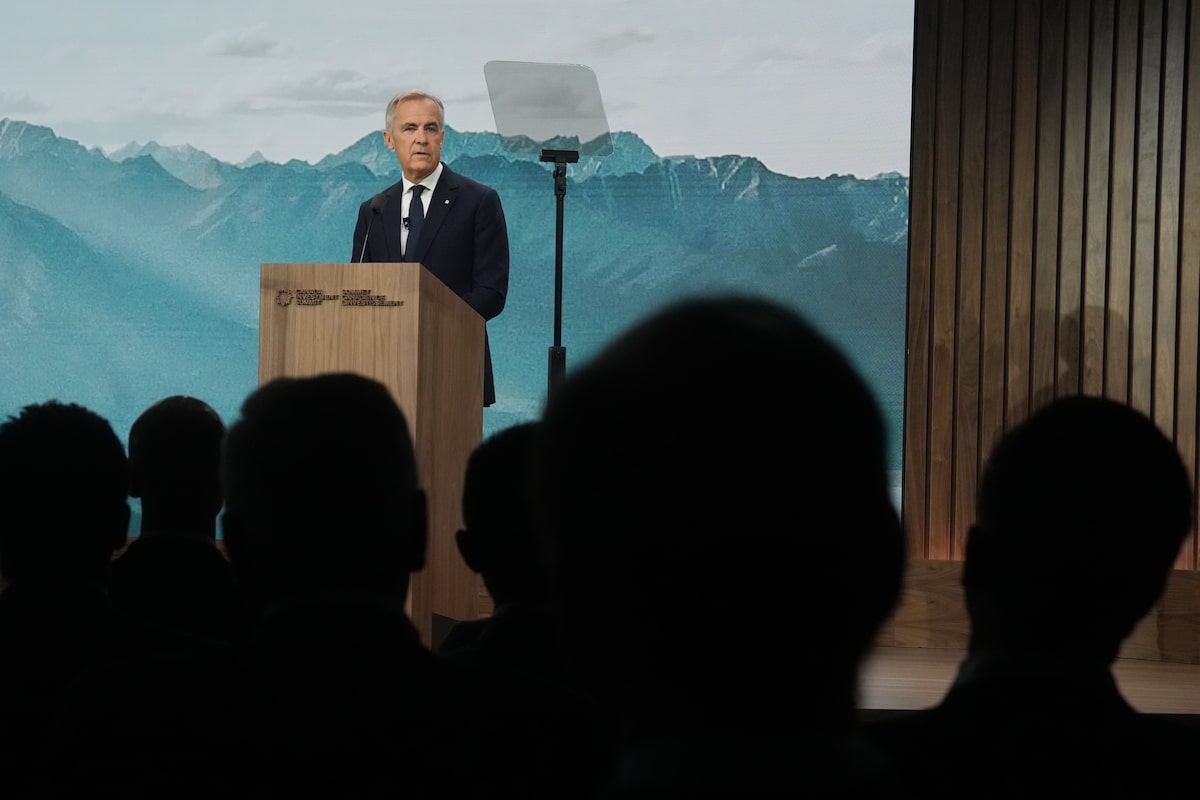
The federal government of Canada will help to fund “a sovereign broadband backbone that connects Canadians from coast to coast to coast, with more direct and secure links to Europe and Asia,” Prime Minister Mark Carney announced.
A “broadband backbone” is the high-capacity core of the internet network that carries traffic between cities and countries. Speaking with reporters later, Mr. Carney said the backbone would also include connections to the Arctic.
…
Representatives for Canada’s major telecom companies supported Mr. Carney’s announcement … As Mr. Carney’s government continues to seek alternatives to reduce dependence on the United States, calls have grown to develop more networking infrastructure that would avoid routing Canadian data through U.S. internet exchanges, thereby exposing that data to potential surveillance.
…
Researchers at the University of Toronto and York University studying the journey taken by data between two points in Canada have found that, among their data sets, about a quarter of those journeys routed through American interchanges, exposing that information to access by the U.S. National Security Agency.
…
Mr. Carney did not provide further details about the broadband project. However, discussions about the ownership and financing model for the project are currently being held between telecom companies and the Major Projects Office, according to two sources with knowledge of the matter.
…
This is amazing news. Too bad the entire Canadian government runs on Microsoft instead of FOSS.
This is honestly quite exciting! In a good way too.
So Santa will finally have high-speed Internet?
Now make Canada an EU member and I see the worlds’ future brighten up quite a bit.
BBC News - EU chief backs plan for Canada to become ‘associate member’ - BBC News https://www.bbc.co.uk/news/articles/cjwyzrr9d3dko
Becoming a member of the EU is fiddly and takes years. From what I’ve recently read, an associate Membership is not out of reach. It could be pushed through relatively quickly and is compatible with eu rules .
That’s because “associate member” doesn’t mean anything right now. It’s a category that doesn’t exist yet for the EU. It certainly is not the same as full membership.
And we’ve seen how unwilling the EU is to create partially in, partially out deals during the Brexit negotiations and there are good reasons for that.
Right now this is all just a gesture, a promising first step to create a new category of alliance with the EU and offer that status to Canada. It’s a good gesture and a genius political play, but we’ll have to wait and see what exactly it means.
UK wanted single market without anything else. I doubt Canada has any illusion that this is on the menu. If they do they are plainly speaking retards. EEA/Switzerland kind of deal under new name is in the game.
Still funny that Canada might become a member before the UK comes back (or just dissolves).
Where will the cable go through? Greenland, then 52nd state?
/jk
I mean this is something that all countries should have always been doing. It’s convenient to piggyback on the private infrastructure of other nations, but I think that can only be viable in the long term if all nations have some of their own infra to balance power.
uh, Telesat Canada? They launch next month.
Europe is also working on their own satellite for military use in the whole of Europe, IRIS^2 (a project from Eutelsat), and Eutelsat already has a line of satellites for internet, to replace Starlink so we (and ukraine) dont have to be dependent on Elon Musk and American laws. https://en.wikipedia.org/wiki/IRIS² https://en.wikipedia.org/wiki/Eutelsat_OneWeb .
Starlink has around 7.000 internet satellites deployed, Eutelsat has around 600 deployed, and they also “fly” higher than Musks, so they can cover a larger area, but the signal is slower. The bandwidth of Eutelsat is smaller.
Starlink has around 40k receptors in Ukraine rn, and they are also smaller and better than Eutelsat’s. Eutelsats receptors are bigger, slower and have less capacity. They have around 1K receptors in Ukraine rn.
But Starlink focuses on the consumer market with their receptors, thats why they are so easy to use, plug and play, but not that safe, they are easy to trace for example… Eutelsat’s receptors, on the other hand, meets the standards required for defense equipment, they are way harder to trace than Starlinks receptors.
Eutelsat is also saying they can already start to replace all Defense related equipment, and offer 5-10K satellites and after that even more… But they say we will hear more in the future about IRIS^2https://www.msn.com/en-us/money/general/starlink-rival-eutelsat-plans-oneweb-expansion-after-1-billion-satellite-order/ar-AA2bXF5H
https://satnews.com/2026/09/15/eutelsat-targets-1300-oneweb-satellites-in-orbit-by-2030-ahead-of-iris²-transition/That’s going to be a great option and satellite internet has some advantages, but those satellites need to connect to something on the ground like the proposed backbone.
And, if I remember correctly satellite internet is also prone to interference from things like weather, human structures, and intentional jamming. Heck, with the USA having military weapons in space they could easily know out satellites. I’m not saying wired internet infrastructure couldn’t be messed with but it, in my non-expert opinion, seems to be more robust.
Gobs of low orbit satellites might be destroying the ozone layer again too so I’m not supporting this stuff until it’s confirmed harmless for a ton of satellite reentry burn ups to keep happening.