

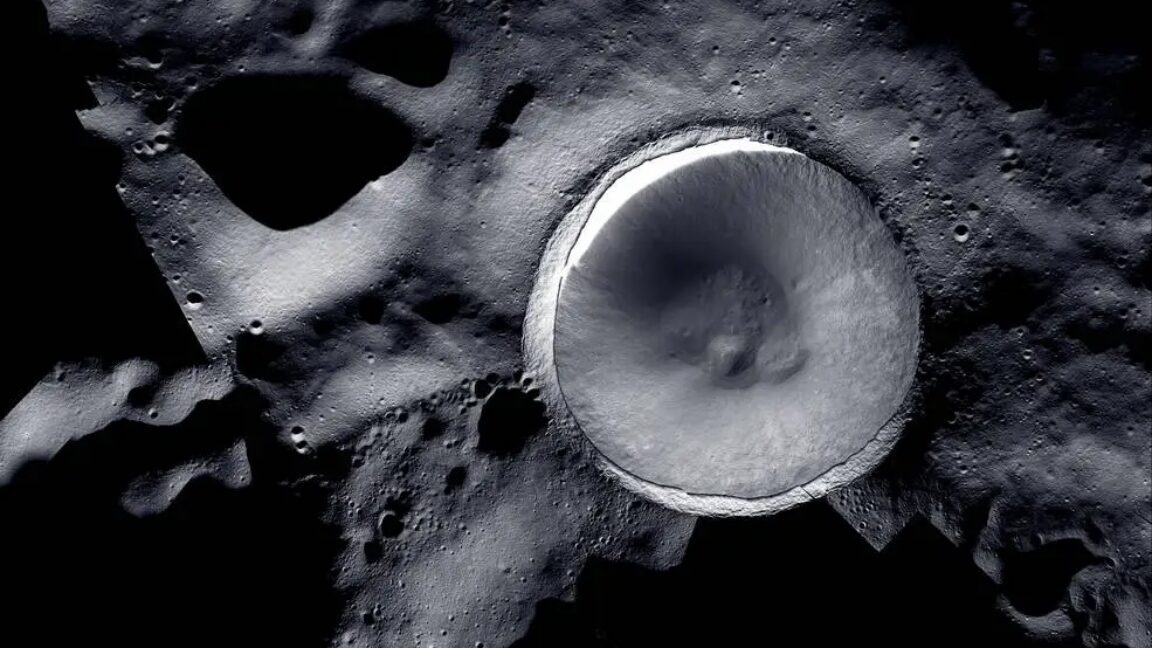
It’s unclear how China will use the win that would come from a successful Chang’e 7 mission, namely the visuals from its vehicles traversing the Moon’s South Pole. It has several options, one of the most intriguing being to claim that the territory explored by its rovers—establishing a keep-out zone for NASA.
That would be a clear provocation, but it could also further galvanize efforts in the United States to invest in Artemis and take the hard steps to accelerate its rollout. It would give Isaacman even more capital in his efforts to reform NASA.
One also suspects it may prompt people who do not view China’s efforts to “beat” NASA back to the Moon as a big deal to reconsider their position.
Would it be cost effective to mine it from the Moon?
By hand, certainly not. But by robot… Especially if the energy can be generated and used onsite, e.g. lunar data centres. Pretty easy to keep things cool on the Moon, after all.
But there’s the cost of sending and maintaining equipment on the Moon.
It would be cheaper than any given war, and end energy scarcity indefinitely. It’s just a matter of solving several engineering problems (fusion mainly) and mustering the political will.
Is it easy to cool? On the sunny side it’s hot. On the shady side it’s freezing.
Guess they could set up something in permanent shadow of a crater and dissipate heat through the ground somehow.
Compared to fusion energy and autonomous mining robots, that’s a pretty trivial engineering problem.
I like the idea of building into the Moon’s volcanic tubes. They’re probably very cold, and well protected.