

[,]
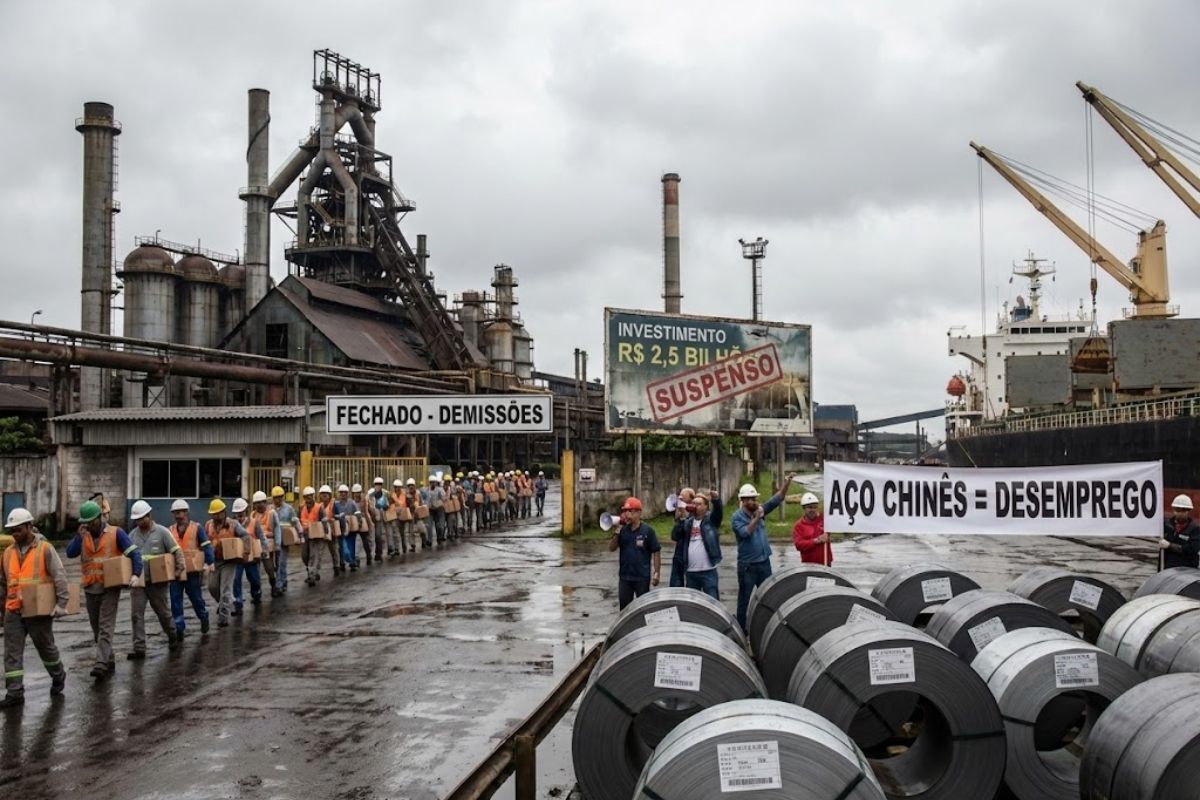
According to the Brazilian Steel Institute, the Chinese offensive relies on… strategies deemed illegal to support the Chinese government to its steel chain.
Figures from Platts, a global price monitoring platform, show that the price per ton of Chinese hot-rolled coils fell from $560 in January 2024 to $454 in November 2025.
The decline coincides with a shrinking profit margin for Chinese steel mills, which, according to the institute, is a sign of dumping: when companies start selling steel abroad below cost or the price practiced in the domestic market to weaken competitors.
In the view of Brazilian industrialists, the steel arriving from China today would be sold at prices incompatible with fair competition.
[…]
According to the Brazilian Steel Institute, steel companies operating in the country [Brazil] had shut down four blast furnaces, one steel mill, and five minimills (semi-integrated plants that melt scrap metal in electric furnaces) by November.
[…]
According to the CEO of the Brazilian Steel Institute, Marco Polo de Mello Lopes, the strategy now is to convince the Donald Trump administration to remove this surcharge on Brazilian steel and revive the quota system created in 2018.
Under that model, companies in the country could send up to 3,5 million tons of semi-finished steel per year to the United States without paying tariffs.
The executive recalls that Trump had already adopted a similar move in 2018 and believes that, if the ongoing negotiation is successful, Brazil would return to operating with a duty-free quota, while the 50% tariff would remain applied to other sales outside that limit.
Hey, look, a reasonable situation for tariffs! A country is exporting goods at below cost to destabilize the market in your country is an excellent reason to impose tariffs. It reduces the attractiveness of the cheap goods, reduces strain on your industry, and helps negate the impact of those cheap goods by providing government with money for programs to retrain employees or incentivize industry to modernize their plants if needed.
Not like whatever is happening… <gestures> …over there.