

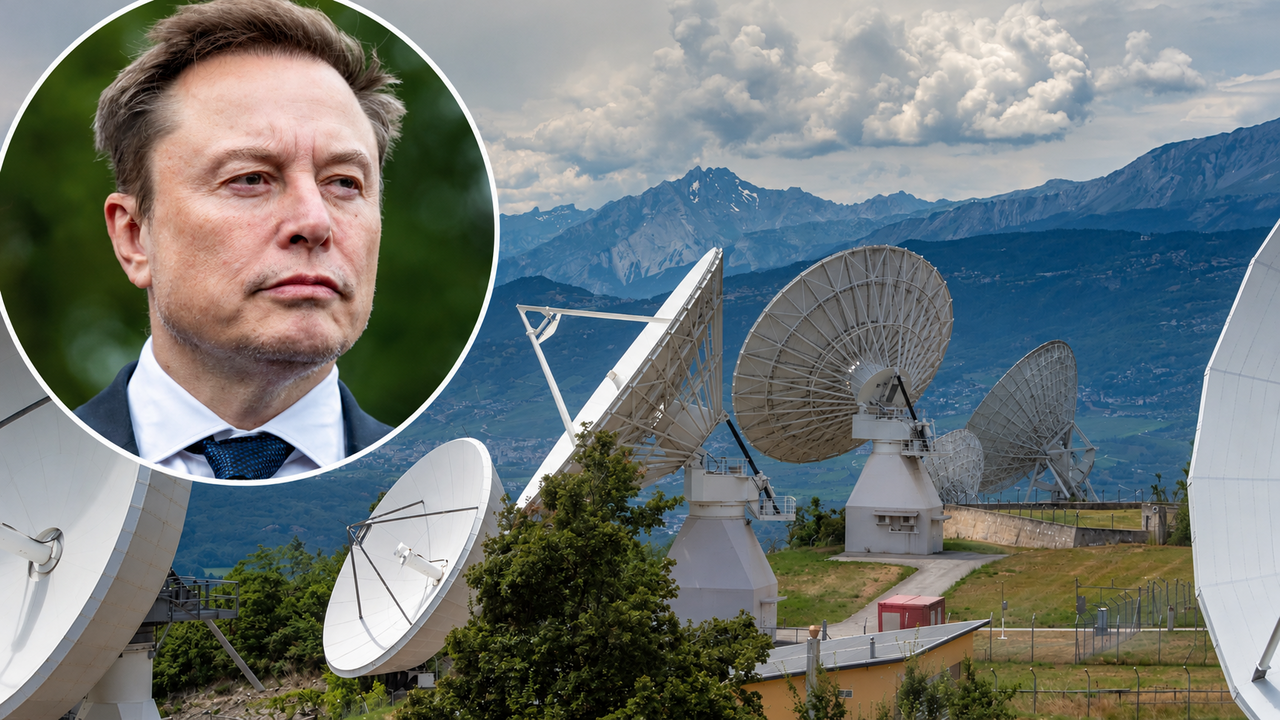
By forcefully de-orbiting his satellites? 🙏
I got excited about this when it was announced some time ago, so I dove into the project. It seems very much not useful and mostly a PR stunt at this point.
These mobile operators are competitors and are often actively working against each other, needing regulation to step in and make them behave. It might be different on this project, but their track record in the past has been not very good.
Then there’s the project itself, they do not intend to build their own sats, let alone launch them. And realistically there is no European launch provider that would be able to deliver even a smallish constellation of 300 sats for a low enough price. Their plan is to buy either a license or a part of a sat from some other provider. It isn’t clear as of yet which, but it looks to be AST Space Mobile, an American company. Chinese providers would be an option, but that would be a step back from US providers, so that’s unlikely. Russian providers are a whole thing I’m not going to touch with a ten feet pole.
AST Space Mobile offers a bent pipe construction where you pay to use a part of the sat, where the antenna and baseband is exclusive for your own use. Groundstations would be fully under EU control (at least within the EU) and in theory the satellite as well. But in reality the provider could still do some stuff to mess with the service, including stopping or degrading it. The exact issue we have with Starlink.
Then there’s the service itself. Starlink is so far beyond other networks, it isn’t a fair comparison. Literally, as Starlink has sats that operate at a extremely low orbit (within the upper parts of the atmosphere) they can offer low latency. With their large number of sats they offer a lot of coverage and stable service. With a large amount of sats and not that many users, the bandwidth is pretty good as well. This of course is because of the huge amounts of VC investments into Starlink and with the big downside of having to launch new sats all the time, as they de-orbit within a few years. So it makes a lot of sense for other providers to have a fewer number of sats in a higher orbit, because they can continue operating for 20-30 years. This means lower upfront costs and more time to recoup that money, but much worse service. High latency, less coverage, less stable and less bandwidth. This has meant any kind of satellite data was very expensive with relatively poor performance. Starlink is the first to offer good performance at a good price. Not sure if they can get it economically sustainable, and launching and de-orbiting all those sats might be destroying the planet. So it’s not a given, but from the customer point of view it’s much better than any other sat internet service.
There’s also the issue of capacity, I don’t think there is a constellation out there that could easily handle the extra capacity needed if we want to kick out Starlink. And that means enough capacity offering at least a somewhat viable replacement in a frequency band we can license throughout the EU. And preferably something that doesn’t require extremely expensive equipment for the customer. Some kind of huge dish with a very powerful radio is a pain in the neck.
So that would mean paying someone to either build out an existing constellation or get a whole new one going. This is going to be super expensive, on the level of 10-50x more expensive per month per customer compared to Starlink. Obviously for military purposes and Ukraine they wouldn’t need to pay, all of the EU tax payers would gladly foot that bill. But it does mean there probably won’t be as many private customers signing on (at those prices probably zero consumers and only few businesses). If we want this new service to actually replace Starlink and provide internet for people who don’t have access to fiber or reliable 5G, the price would need to be in line. Especially if the service sucks as well.
Unfortunately I found out all this and got a bit sad. It would be awesome if we could kick out all of the American services and do our own thing. But for the immediate future it doesn’t look likely. And projects like this often take 10+ years to get anything going. I pray to his noodlyness the war doesn’t go on for that long and there won’t be more wars in Europe by then. But that means Ukraine is stuck with Starlink and all of the Musk Trump bullshit.
