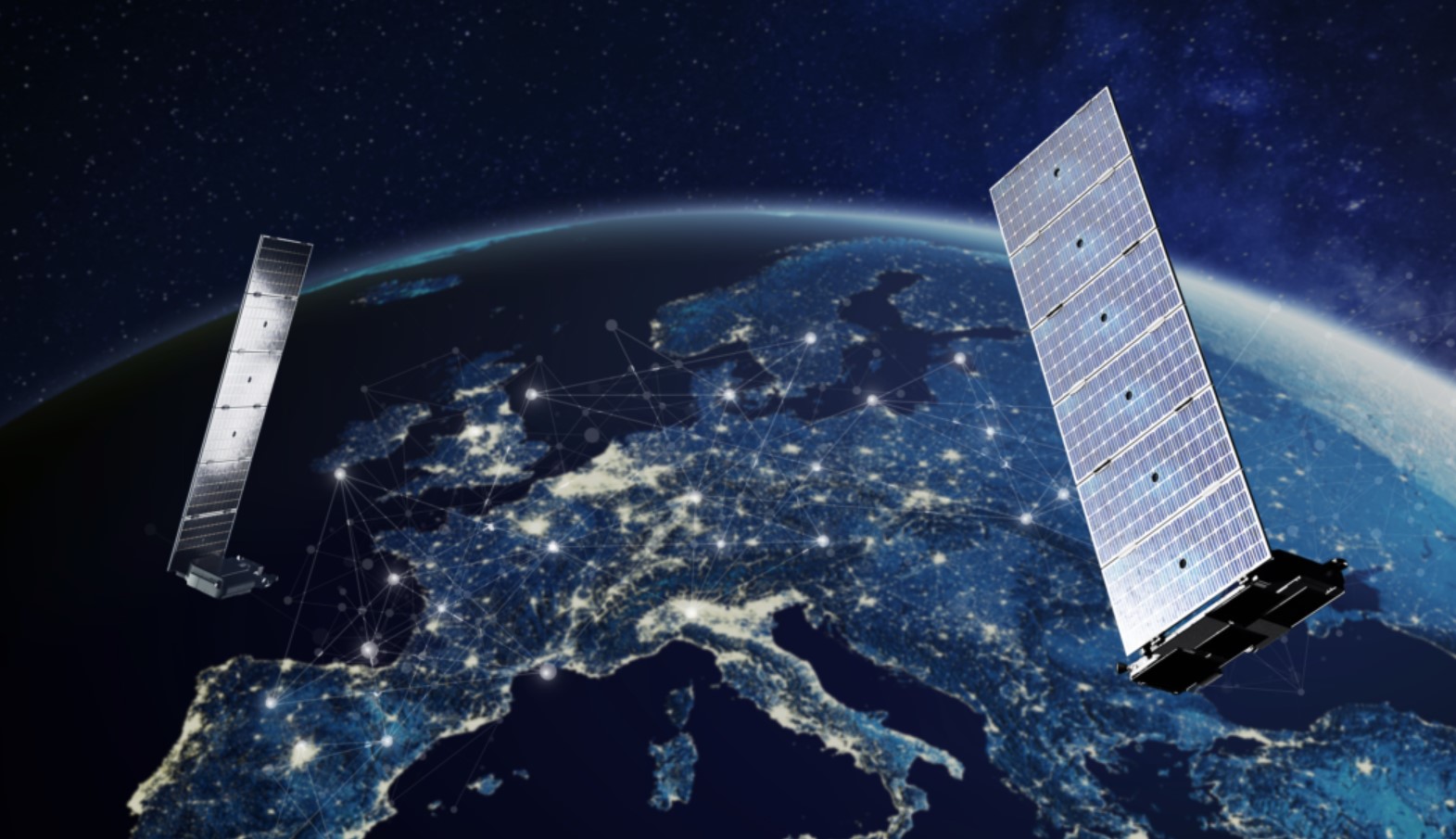
Russia and China have developed a joint plan to counter the U.S. Starlink satellite communications constellation.This was reported by The Insider as part of a joint investigation with Der Spiegel […]
There is a low altitude and a high altitude point in an orbit. (Apogee for the high point, perigee for the low point) If you slow down at perigee, the altitude of the apogee decreases. If perigee is in atmosphere, then every time you go through that point, you slow down and the apogee decreases again. Sooner or later too much of the orbit is below atmosphere, and whatever it is that was in orbit burns up or falls down.
I was just thinking this conversation is clear who has played KSP.
Simplified, you have a rocket orbiting around the earth going over both poles in a circular orbit. Above the north pole its 250km high and fires off its rocket all at once. Now its orbit is an eclipse going to 500km above the south pole, but it will return to 250km above the north pole. If you want to increase your altitude over the north pole you would need to accelerate above the south pole.
Orbiting is much more about going really really fast than it is about going really high up. Vast majority of the acceleration of launching into orbit goes into acceleration parallel to the ground rather than lifting away from it.


There is a low altitude and a high altitude point in an orbit. (Apogee for the high point, perigee for the low point) If you slow down at perigee, the altitude of the apogee decreases. If perigee is in atmosphere, then every time you go through that point, you slow down and the apogee decreases again. Sooner or later too much of the orbit is below atmosphere, and whatever it is that was in orbit burns up or falls down.
I think.
Ah, at last someone properly qualified to talk on the matter. So nice to see another graduate from the Kerbal Space Program.
Ah, so you’d need an impulse around the apogee, and acceleration around just the perigee can’t create a stable orbit? Makes sense, thanks!
Thats what I remember, someone who plays KSP will probably be along to telle what I forgot.
I was just thinking this conversation is clear who has played KSP.
Simplified, you have a rocket orbiting around the earth going over both poles in a circular orbit. Above the north pole its 250km high and fires off its rocket all at once. Now its orbit is an eclipse going to 500km above the south pole, but it will return to 250km above the north pole. If you want to increase your altitude over the north pole you would need to accelerate above the south pole.
Orbiting is much more about going really really fast than it is about going really high up. Vast majority of the acceleration of launching into orbit goes into acceleration parallel to the ground rather than lifting away from it.
This guy gets it👆👆