

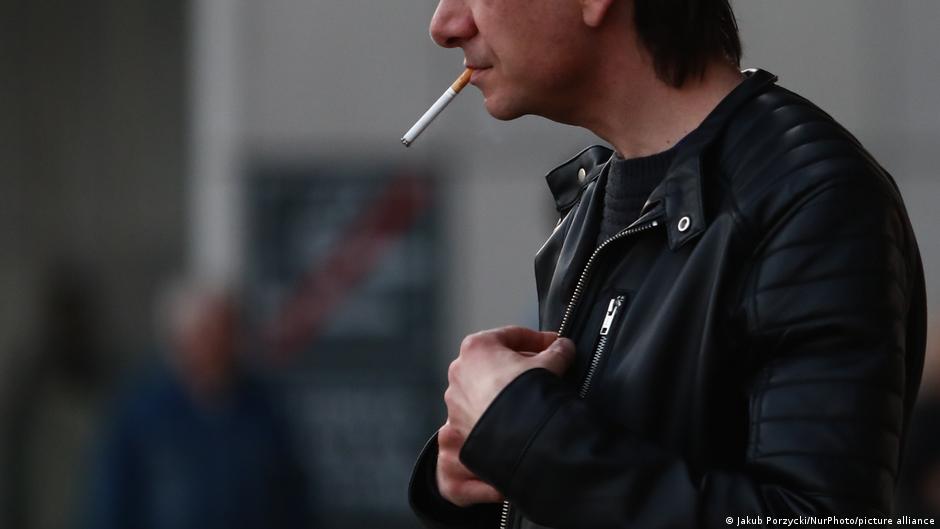
- Technically, the new law will raise the legal age requirement in the UK for buying cigarettes, cigars or tobacco, which is currently 18, by one year in every subsequent year, starting on January 1, 2027
- This will effectively mean that people born on or after January 1, 2009 will never be eligible to buy them
- Retailers will face financial penalties for selling the products to those not entitled to them
- The government will also be empowered to impose a new registration system for smoking and vaping products entering the country, seeking to improve oversight
- The bill will expand the UK’s indoor smoking ban to a series of outdoor public spaces, for instance in children’s playgrounds, outside schools and hospitals
- Most indoor spaces that are designated smoke-free will become vape-free as well
- Smoking in designated areas outside pubs and bars and other hospitality settings will remain permissible
- Smoking and vaping will remain legal in people’s homes
- Vaping will become illegal in cars if someone under the age of 18 is inside, to match existing rules on smoking
- Advertising for smoking and vaping products will be banned
- People aged 18 or older will remain eligible to purchase vaping products, but some items targeted at younger consumers like disposable vapes have already been outlawed as part of the program
How about we say, smoking in your basement alone, in a house only you live in to avoid the semantics. Second hand smoke exposure usually requires the smoking to be taking place at the same time or very recently. So first responders are not signficantly at risk if the person isn’t smoking at the time. And their ppe should help reduce that further. If it is a concern based on data, then better ppe should be provided. 2nd hand smoke is probably the least concerning thing they are exposed to when responding. Other people like contractors and such can refuse to enter until the place is aired out.
People who smoke do end up needing more medical care. But so do people who drink alcohol, eat red meat, or any of a large number of lifestyle choices. Motorcycle riders are a great example. If they get into an accident, they will likely need greater healthcare than someone in a car. So should be ban those too?
As for who decides what rights should be considered for laws. That is litterally what we are discussing here. No it’s not universal anything. It’s my opinion. Universally no one has any rights.
Cool, you’re going to die or move sometime, and that smoked in house will go to someone else, which will harm them.
Your house burning down harms your community by using up emergency response resources.
Hell, the smoke from your burning house harms your neighbors. I should know, since the house halfway down the street from me caught fire and fogged up the whole neighborhood for a day. I had to take my wife to stay with her parents because the smoke was extremely irritating for her.
Tell me you’ve never been in an indoor smoker’s house without telling me.
Ah, so your opinion is law? Must be nice to be a despot. Am I talking with Kim? Maybe Vlad?
Yes… This was my point actually, and it takes away from your point that harming other people cannot be a right. Rights are determined by the society you are in. I don’t have a right to murder because the society I’m in has said that murder is not a right. It’s not any more complex than that.
What are you even arguing here? You’ve jumped around so much, I can’t even really tell if you remember what your position was? I think it was something like…
“Laws should be restricted to protecting people from other people, not from themselves.”
Or…
“Well to be honest, there is an argument for letting you build bombs in your basement.”
I dunno. You seem to be reading different things than I am writing.
I litterally said “should” which is a pretty clear indication that it was my opinion. You saw me reference othe things that cause increased healthcare costs, but ignored the point that some group deciding which life choices that cost more are okay is, in my opinion, not something laws should be used for. And gou say Iam jumpping around when my focal point has been pretty clear. Don’t legislate what people can do if it does not DIRECTLY impact others.
You talk about cleaning out a smokers house. It may smell bad, but do you have any data to show it is bad for you after the smoke has settled? And no one “has” to go clean it out. They can choose to take on that job or not. So it isn’t a direct impact. It requires the person to choose to be impacted. With bombs… if a guy has 50 acres in the middle of nowhere, why shouldn’t he be allowed to make bombs in his basement.