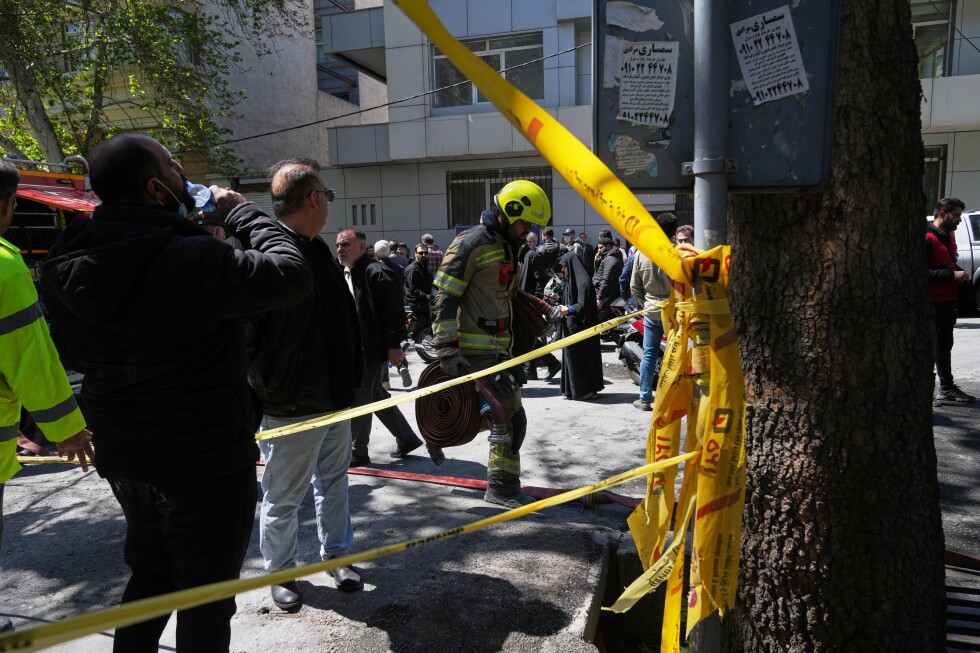
Iranian officials urged young people to form human chains to protect power plants, as U.S. President Donald Trump warned that a “whole civilization will die tonight” if Tehran does not meet his latest deadline.
In response, the US nukes Russia. Not just a little bit either, they nuke all population sites.
No “decapitation” strike is possible from either side. Any attack by either side is met by the other striking back, and again not just a little bit - all population sites. That is what mutually assured destruction is.
And maybe more if you need:
if you think the US nukes Russia, then:
surprise, Russia nukes the US back.
Once again, no decapitation strike is possible from either side. A strike by the US is met by Russia striking back. That is what mutually assured destruction is.
MAD literally works if either side starts nuking the other, regardless of the reason why. This is the whole basis of MAD.
Ok I’m really gonna peace out. You really need to do some reading.
I’ve read Schelling’s Strategy of Conflict so I have done some reading on this. Once again you are assuming players are always rational which is a simplistic assumption. The game doesn’t work if one side doesn’t care about iterative rounds, chooses to signal erratic behaviour or doesn’t understand the implications of their actions.
A good example is Nixon’s “madman theory” during the Vietnam conflict.
Trump is erratic and can’t be assumed to act rationally , so his use of a nuclear weapon would massively increase the chance that Russia would use one in response on the basis that the US is willing to kill the leaders of other countries in a sneak attack.
MAD is not set in stone and can break down in certain circumstances.


Play this out:
Russia nukes the US.
In response, the US nukes Russia. Not just a little bit either, they nuke all population sites.
No “decapitation” strike is possible from either side. Any attack by either side is met by the other striking back, and again not just a little bit - all population sites. That is what mutually assured destruction is.
And maybe more if you need:
if you think the US nukes Russia, then:
surprise, Russia nukes the US back.
Once again, no decapitation strike is possible from either side. A strike by the US is met by Russia striking back. That is what mutually assured destruction is.
MAD literally works if either side starts nuking the other, regardless of the reason why. This is the whole basis of MAD.
Ok I’m really gonna peace out. You really need to do some reading.
I’ve read Schelling’s Strategy of Conflict so I have done some reading on this. Once again you are assuming players are always rational which is a simplistic assumption. The game doesn’t work if one side doesn’t care about iterative rounds, chooses to signal erratic behaviour or doesn’t understand the implications of their actions.
A good example is Nixon’s “madman theory” during the Vietnam conflict.
Trump is erratic and can’t be assumed to act rationally , so his use of a nuclear weapon would massively increase the chance that Russia would use one in response on the basis that the US is willing to kill the leaders of other countries in a sneak attack.
MAD is not set in stone and can break down in certain circumstances.