

cross-posted from: https://lemmy.ml/post/45230011
March 30, 2026
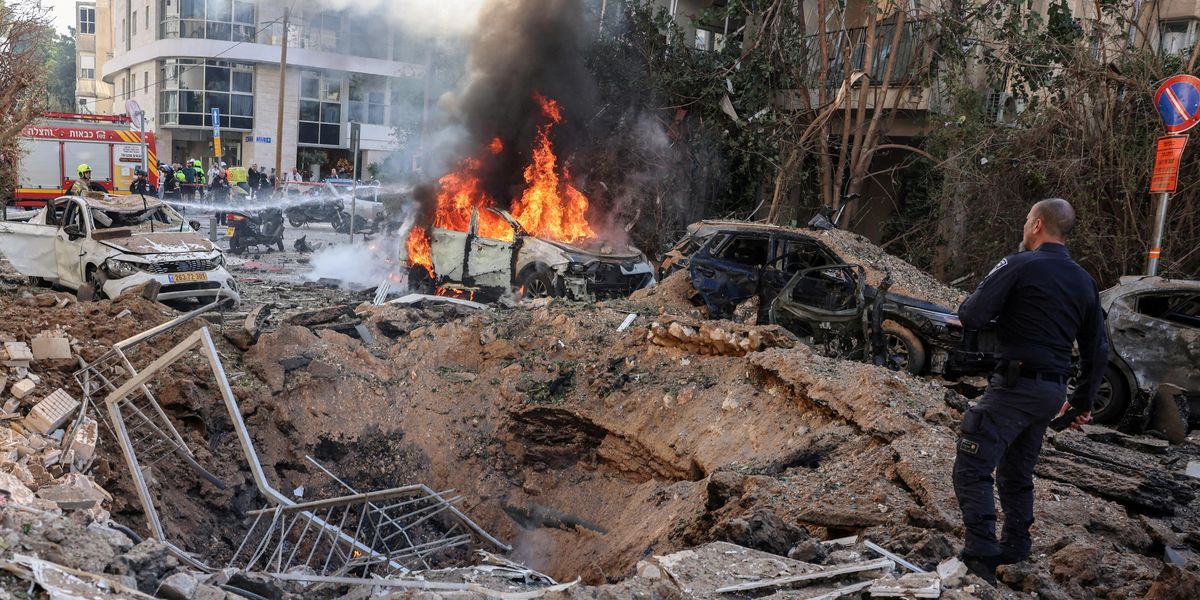
A month into the U.S. military campaign against Iran, Israel’s vaunted air defense system is showing its limits. Just in the past 10 days, major cities including Tel Aviv, Dimona, and Arad sustained significant damage when Iranian missiles successfully evaded Israel’s network of interceptors.
The most obvious explanation for the apparent failures is that depletion of Israel’s interceptor stockpiles is forcing the Israel Defense Forces to ration munitions or prioritize targets. But the faults in Israel’s air defenses almost certainly have deeper roots. After all, even if forced to defend only the most important locations, Israel would almost certainly place Dimona — a city located near several of Israel’s key nuclear facilities — at the top of the list.
The more worrisome reality is that gaps in Israel’s air defenses may be detection (rather than interception) failures resulting from damage to the radars and sensors that underlie the integrated air defense network shared by the United States, Israel, and Gulf partners. If true, the implications would be dire. Operating without the “eyes” that the American military relies on to identify and mitigate threats, U.S. forces and assets would be much more vulnerable than previously understood.
The large radars that were destroyed were used for early detection, they detected the missiles when they launched.
The antimissile defense systems have other smaller detection radars attached to them, but they only give them roughly 2 minutes of warning before impact. This doesn’t change their accuracy necessarily, but doesn’t give them enough time to vacate targets.
And most recently, it allows Iranian multi headed missiles to reach Israel airspace, and it doesn’t matter if the interceptors see it two minutes before landing because it splits into a hundred heads that are impossible to intercept.
It’s not just a matter of volume, Iran has been landing bigger payloads more often, a combination of no early detection and Israel running low on interceptors (that’s due to earlier volume attacks with the older missiles).
They also use cheap slow low flying drones that aren’t detected by the the radars at all. They’re easy to shoot down once detected, but they’re also harder to detect despite how slow, low, and loud they are. If they don’t have something ready to shoot them down and don’t see them until they get close to the target, they make it through.
Iran used older missiles to overwhelm the radars and anti-missile systems and hit them with drones while they were intercepting the missiles. They haven’t destroyed all of them, but they’ve destroyed plenty, and it does seem they’ve destroyed/heavily damaged most if not all the early detection radars in the region.
Where are you getting all that info? It isn’t in the article which is my entire point. Don’t mistake my criticism of the poorly written article as support of one side or the other.
https://apnews.com/article/iran-qatar-udeid-air-base-attack-us-aace65a65a0ce69090a7b65fe85cfac8
https://www.reuters.com/pictures/photos-show-aftermath-irans-waves-retaliatory-strikes-2026-03-30/
https://apnews.com/article/iran-war-us-troops-wounded-saudi-base-8404fd9b67b76c756e543fc307565572
There’s plenty more articles about different bases arrive the gulf and in Jordan being targeted and radars destroyed. You don’t need to just take this article’s statement at face value, but they also don’t need to directly cite a heavily reported reality in an article making a different point.
Keep in mind that the gulf have heavy censorship laws and have been arresting people for sharing footage, so we mostly see things from satellites after the fact.
And Israel is even worse on censorship, and you’ll find very little reporting on the hits they’re taking on MSM, but you can find plenty of footage on telegram and social media.
I believe you’re mistaking my criticism of the article for support of Israel or the United States.
When I asked where you’re getting your info, that was a rhetorical question. The point of that was to show that the article that is linked in this thread is poorly written. I’ve read better OSINT analysis on Twitter threads.
Yes, radars were destroyed. No, there’s no analysis in the article to indicate that destroying these radars changed the course of war as they claim in the headline. This makes it a shitty article imo.
How so?
The article absolutely contains analysis. It argues that the destruction of radars and sensors likely degraded the integrated U.S.-Israeli air defense picture, which helps explain why Iranian missiles and drones started getting through more effectively. You can disagree with the strength of that analysis, but it’s false to say there’s no analysis at all. The real issue is that the headline is more confident than the evidence, because the piece relies on circumstantial indicators and inference rather than hard proof that radar losses directly changed the war’s outcome.
I gave the same analysis and you accepted my take…